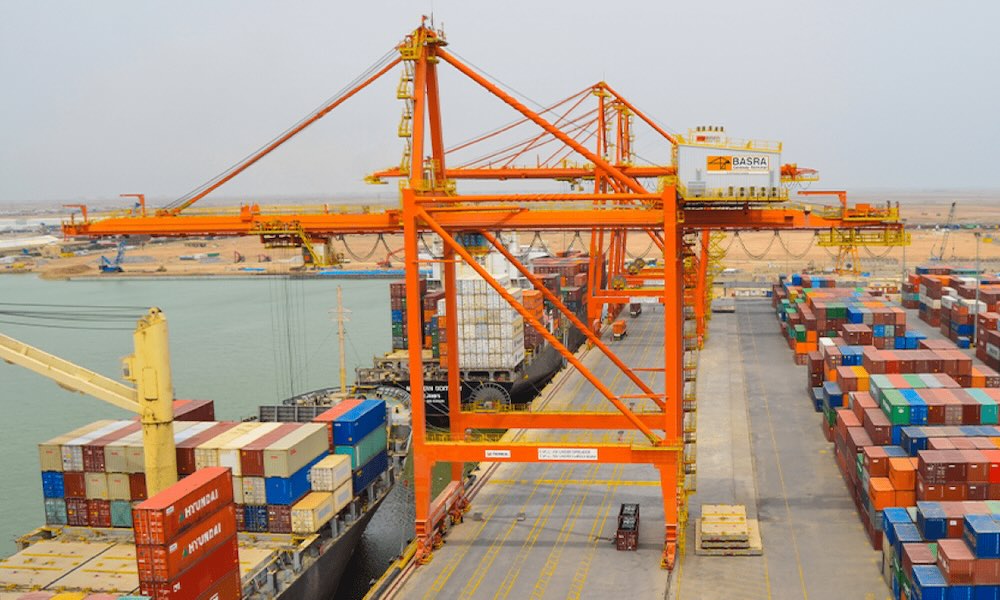
Iraqi Maritime Line is resuming scheduled container operations in the Gulf after an absence of more than half a century, Splash247 reports. The return comes as Iraq works to restore maritime links disrupted by the Strait of Hormuz crisis, which has pushed more of its container traffic towards alternative ports and land transport.
Citing Alphaliner, Splash247 said the national carrier would use the 902 teu Basrah for an eight-day shuttle between Dubai’s Jebel Ali and Umm Qasr, Iraq’s main container gateway. The inaugural departure from Jebel Ali was scheduled for 20 October, with arrival in Umm Qasr two days afterwards. Iraq’s transport ministry described the launch as the carrier’s first regular Gulf service since the mid-1960s.
The service enters a market whose supply routes have changed sharply since the Hormuz shipping crisis began at the end of February. Increasing amounts of Iraq-bound cargo have instead been sent to Aqaba, Jordan’s Red Sea port, and then moved by road through the Trebil border crossing.
Figures from the Jordan Shipping Association, reported by Splash247, show that Aqaba processed 37,182 transit containers destined for Iraq in the first seven months of 2026. That compared with 3,599 in the same period of 2025, an increase of 933%.
Major container carriers have adapted their networks to those disruptions. Maersk has launched landbridge services from Aqaba to Iraq. CMA CGM has offered routes through Aqaba for southern Iraq and through Turkey’s Mersin for northern destinations, alongside multimodal links using Jeddah and ports in Oman and the UAE.
Smaller feeder ships have also preserved some sea connections. In July, Hapag-Lloyd outlined a route involving discharge at Khorfakkan, road transport to Sharjah or Jebel Ali, and onward carriage by third-party feeders. The Iraqi shuttle adds a dedicated national connection to the region’s largest container hub, but Splash247 presents it as a supplement to overland routes rather than a replacement, with Hormuz-related shipping risks still unresolved.