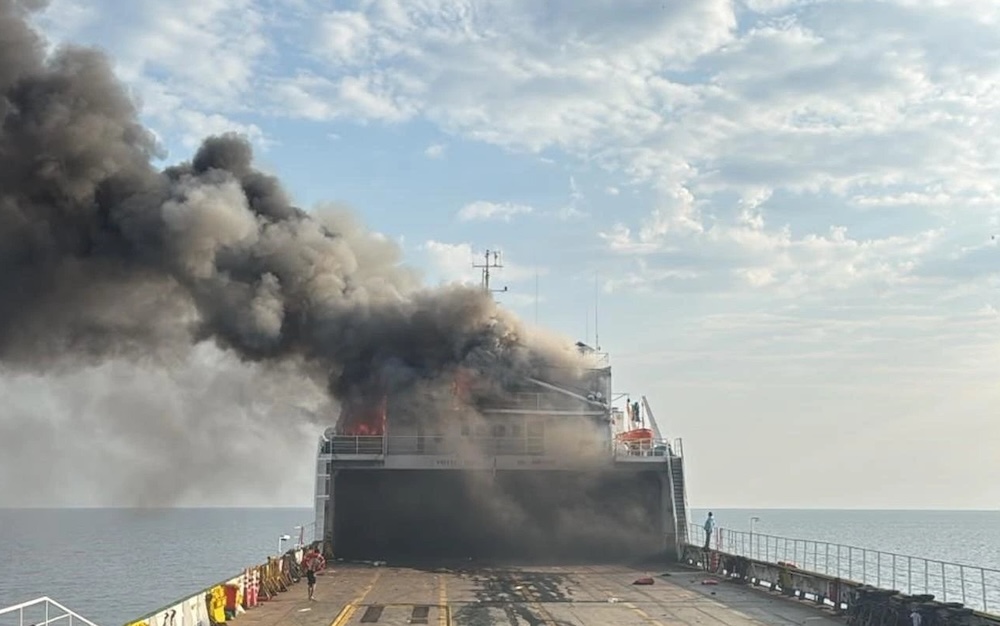
NATO is increasing surveillance in the Black Sea after deadly attacks on merchant vessels off Romania and Bulgaria, deploying more maritime patrol aircraft, drones and radar equipment, Splash247 reported. The reinforcement follows Tuesday’s meeting of the North Atlantic Council in Brussels and includes intelligence personnel and teams specialising in explosives investigations.
Colonel Martin O’Donnell, NATO’s military spokesman, said the deployments were intended to improve reconnaissance, intelligence exchanges and the detection of threats to commercial shipping. Bulgaria has confirmed that a US Navy P-8 Poseidon has started reconnaissance flights over the Black Sea following Sofia’s request for alliance assistance. Bulgarian prime minister Rumen Radev said allies had responded swiftly and that additional help was expected.
Four merchant vessels have been attacked within Bulgaria’s exclusive economic zone during the past month, with two sinking, according to Splash247. Allied experts are also expected to support the investigation into the October 13 drone attack on Chelsea 3, a Malta-flagged general cargo vessel. Its 15 crew members were all rescued. Investigators are analysing drone fragments recovered after the incident to determine which weapon was used.
The incidents also include attacks on two chemical tankers off Romania last week. One, the Comoros-flagged Yara J, suffered a fire following a suspected drone strike near the Sulina Canal, inside Romanian territorial waters. Its crew put out the fire without external help. Splash247 reported that the attacks were putting routes to Ukraine’s Danube and Black Sea ports at greater risk, increasing pressure on grain exports and raising war-risk insurance costs.
Separately, Russia’s defence ministry claimed on Tuesday that Russian forces had hit three cargo ships at Reni and two travelling towards Odesa, alleging military use of the vessels. NATO has made no formal attribution to Russia for the recent attacks off Romania and Bulgaria, and Moscow denies responsibility. Bulgarian authorities nevertheless reported continued commercial operations at Varna and Burgas, with no fall in vessel traffic.